 |
| Two spiders having a meet cute on April 22, 2019. Bali has over one million species of spiders. |
Monday, April 22, 2019
Photo Story Example: Spiders of Bali

Friday, April 19, 2019
The insperational Gus Van Sant
 | |
| Gus Van Sant |
I’d like to highlight a long time inspiration of mine Gus Van Sant.
Most commonly known for directing “Good Will Hunting”, and "Milk", but a majority of his movies are independent films shot or based in the North West, his home land.
His work is not limited to just film making though, Van Sant is a multi-talented individual who has a
portfolio that consists of...
Before working on "Good Will Hunting" he was a painter.


TV commercials
Some of his first gigs were making commercials in the Northwest.
One of the newer commercials he has made is the Matthew McConaughey Lincoln commercial.

Photography
Most his celebrity portraits were captured on films he was working on.
 |
| Matt Dillon and Nicole Kiddman |
 | ||
| The late Rive Pheonix and Keanue Reeves |
 | |
| The late Robbin Williams |
Music Videos
He’s had opportunities to make music video for Elton John, The Red Hot Chilli Peppers, David Bowie,
and Stone Temple Pilots to name a few.
and Stone Temple Pilots to name a few.
 |
| Red Hot Chili Peppers "Under the Bridge" |
It's incredibly inspiring for me to to see a Portland native making a career out of the things I love. He showed me the career I wanted to get into before I even knew it. He's a great visual story teller, and the research into his films based on true events shows it.
My favorite films of his all belong to the "Death Trilogy". Three films based on deaths that accrued in real life. "Garry" is the first in the series, which is a film about 3 hikers who got lost in New Mexico, leaving one of the Hikers dead. The second film to the trilogy is "Elephant", which is based off of the Columbine School shooting. Leaving "Last Days", a visual film containing the activities Kurt Cobain did in his remaining few days of life. "Last Days" actually include relics of Kurt Cobain's, as well as some items from the house where he lived with his family before committing suicide.
 |
| On the set of "Paranoid Park" at the Burnside Bridge skate park |
My favorite films of his all belong to the "Death Trilogy". Three films based on deaths that accrued in real life. "Garry" is the first in the series, which is a film about 3 hikers who got lost in New Mexico, leaving one of the Hikers dead. The second film to the trilogy is "Elephant", which is based off of the Columbine School shooting. Leaving "Last Days", a visual film containing the activities Kurt Cobain did in his remaining few days of life. "Last Days" actually include relics of Kurt Cobain's, as well as some items from the house where he lived with his family before committing suicide.
The art of creating a film based on true events is not as simple as re-telling a someones story.
All of the journalistic practices that go along with documentary film making still must apply.
Van Sant has proved in his first film “Mala Noche” the importance of actors studying the lifestyles
of the people they are portraying. However, the "death trilogy" all though the events are accurate,
the characters are loosely based of the real people. I believe this creates freedom for the film maker
to show the story in their eyes.
All of the journalistic practices that go along with documentary film making still must apply.
Van Sant has proved in his first film “Mala Noche” the importance of actors studying the lifestyles
of the people they are portraying. However, the "death trilogy" all though the events are accurate,
the characters are loosely based of the real people. I believe this creates freedom for the film maker
to show the story in their eyes.
7 movies based on true events
1 mockumentary
4 movie adapted novels
6 movies shot in the Pacific Northwest
So in a nutshell, Gus Van Sant has inspire me to embrace my Northwest roots in my career.
He encourages me broaden my horizons with the media I produce, and to keep my journalistic
instincts when thinking about films based on true events, but at the same time allowing free range
creativity.
He encourages me broaden my horizons with the media I produce, and to keep my journalistic
instincts when thinking about films based on true events, but at the same time allowing free range
creativity.
In addition I'm adding this great Portlandia skit Van Sant was cool enough to do.
Thursday, April 18, 2019
Why Good Will Hunting Stands Out
 |
| Matt Damon (Left) as Will Hunting and Robin Williams (Right) as Dr. Sean Maguire. Photo Couresy of Spoonful of Positivity |
Will Hunting is a troubled, yet gifted young man who likes to go get drunk with his friends when he's not working as a janitor. When Hunting is landed in trouble after fighting a gang with his friends who bullied him as a kid, he has to decide whether he wants to take therapy with Dr. Sean Maguire and contribute to society or do his time in jail. After a few failed sessions, Maguire successful made Hunting open up about his childhood and how he was a victim of abuse as an orphan by his foster father. Hunting learns he was not the only one to be physically abused.
Good Will Hunting presents a brilliant cast such as Matt Damon as Will Hunting who is genius while he works as a janitor. Professor Gerald Lambeau challenges his students by writing down a difficult Math problem for them to solve and Hunting solves it without the professor knowing his identity. Robin Williams and Ben Affleck play Dr. Sean Maguire and Chuckie Sullivan as supporting roles.
The script was originally about a young man who was selected by the government for recruited because of his high intelligence level. Matt Damon created this script for his playwriting assignment at Harvard University and had asked Ben Affleck if he could join to finish the script together according to Refinery29.
“I had a few electives left. There was this playwriting class and the culmination of it was to write a one-act play, and I just started writing a movie. So I handed the professor at the end of the semester a 40-some-odd-page document, and said, ‘Look, I might have failed your class, but it is the first act of something longer,” Damon said in an oral history in Boston Magazine. As it turns out, Damon’s professor, Anthony Kubiak, wasn’t upset that Damon threw out all of his directions. He called the script “very authentic and real.”
Good Will Hunting stands out for it's ironic situation the main character is placed in with the unlikely scenario of a genius working as a janitor. The audience can empathize with a man who is wasting his talent over his troubled past he underwent and had been a victim of his foster father as a child. The complex relationship between Hunting and Maguire inspires Hunting to face his inner demons and finally utilize the gift he was given.
“I had a few electives left. There was this playwriting class and the culmination of it was to write a one-act play, and I just started writing a movie. So I handed the professor at the end of the semester a 40-some-odd-page document, and said, ‘Look, I might have failed your class, but it is the first act of something longer,” Damon said in an oral history in Boston Magazine. As it turns out, Damon’s professor, Anthony Kubiak, wasn’t upset that Damon threw out all of his directions. He called the script “very authentic and real.”
 |
Ben Affleck (Left) as Chuckie Sullivan
Photo Couresy of Miramax
|
The pain and empathy of a young man being held back by his past, the casting, and the complex relationship between Hunting and Maguire is what drove this movie to be a classic. Each piece I've mentioned is what makes Good Will Hunting a near-perfect masterpiece.
Wednesday, April 17, 2019
Washington Post's Lorenzo Tugnoli
Lorenzo Tugnoli is an Italian photographer who's work has been published by the Washington Post, the New York Times, and the Wall Street Journal, just to list a few.
In 2019 he won the Pulitzer Prize for feature photography, although his work was originally entered into the breaking news photography section.
Being self taught Tugnoli traveled the world shadowing renowned photographers to learn the trade. His work was extensively in the Middle East and he lived in Afghanistan for several years.
His work tends to focus on problems such as poverty, lack of supplies, and over population in places like Yemen, Mosul, and Libya.
Although, all very meaningful, his photography can come off as simplistic in that his work really implores the audience to dig deeper.
This photo, for example could be interpreted in many different ways given the circumstances. The viewer could see that these girls are in school and connect it back to the lack of education provided for women in third-world-countries. However, someone could also see this and think that the building is very monotone, missing out on posters and color and be reminded of the poverty that people in these areas are often subjected too.
This picture is the one that got me really interested in Lorenzo Tugoli's work.
In 2019 he won the Pulitzer Prize for feature photography, although his work was originally entered into the breaking news photography section.
Being self taught Tugnoli traveled the world shadowing renowned photographers to learn the trade. His work was extensively in the Middle East and he lived in Afghanistan for several years.
His work tends to focus on problems such as poverty, lack of supplies, and over population in places like Yemen, Mosul, and Libya.
Although, all very meaningful, his photography can come off as simplistic in that his work really implores the audience to dig deeper.
 |
| "Students attend class at the Sir Alibdaa school in the al-Thawra hospital neighborhood of Taiz, Yemen. The school is a few yards away from a road exposed to Houthi sniper fire (December 31, 2018)" |
This photo, for example could be interpreted in many different ways given the circumstances. The viewer could see that these girls are in school and connect it back to the lack of education provided for women in third-world-countries. However, someone could also see this and think that the building is very monotone, missing out on posters and color and be reminded of the poverty that people in these areas are often subjected too.
A photo like this begs its audience to pay attention to the fine details. When and where was it taken? What is the political climate like in this atmosphere? How dangerous was it for Tugnoli to get the shot?
Growing up, I always wanted to be the one taking these photos. The ones that make your heart sink so much, you cannot help but to find more information. The picture alone, speaks a thousand words but when the description is added, it almost beseeches the audience to ask questions. To me, that is what journalism should be all about. Forcing people to ask the hard questions and second guess the information that is being fed to them.
 |
| "Taif Fares gasps for air in the intensive-care unit of al-Sadaqa Hospital in Aden, Yemen, on May 21, 2018. She was born with a heart disorder and needed constant care. Taif died few days after this photo was taken (December 31, 2018)" |
This picture is the one that got me really interested in Lorenzo Tugoli's work.
First of all, using a child as the subject matter is bound to pull on some heart strings, and to see one with a condition that most likely could have been aided in America is simply heartbreaking. The contrast between these two images is that the first needed the aid of the caption to really explain its meaning. While this one, is clear with or without the explanation. You see a child, who is obviously sick and in pain, wrapped in cords and looking so tiny on a pillow of color.
The saturation in the pillow compared to the sickly face of the girl adds to the drama.
The beauty of the these two images wrapped into the pain and devastation of the reality behind them forces an audience to question.
If they do not make you worry and wonder, then you are not looking hard enough, and I find that simply astounding.
Cheryl Diaz Meyer, Photojournalist and Minority in so Many Ways
Theresa Matthiesen/Digital Media, Journalism 111
Cheryl Diaz Meyer is a Filipina photojournalist who was awarded the Pulitzer Prize for Breaking News Photography in 2004.
What inspired Meyer is that she is a woman, from a small and often overlooked collection of islands. She has built a career that is widely recognized and has been published in high profile news publications such as, The New York Times, The Washington Post, the Los Angeles Times and the Chicago Tribune.
Information from her website says that she considers herself a, "...visual storyteller, photo editor, videographer and producer, writer and public speaker."
Meyer's main focus is showing the realities of war and the strife between Muslims and Christians. She has covered many countries, such as Indonesia, Afghanistan and the Philippines.
I appreciate that she hasn't taken the safe road in her work. She has put herself out there in every way to tell the stories she feels passionate about. Visually, her photographs are beautiful. I appreciate her use of black and white and composition to bring photos that focus on the faces of her subjects. They are compelling and aching, they reach for your heart and your gut. I respond in a way that just reading a caption or description in a story doesn't always require such a strong response.
For example, this is a caption from a photo she took.
"AFGHANISTAN, 2001. Momo Juma, 56, sheds her pride to beg outside the gates of the Jamay Mosque in Khoja Bahauddin. years of war have left many widows and refugee women in extreme poverty as they have little opportunity to work and earn money for themselves or their families. (Photo: Cheryl Diaz Meyer/The Dallas Morning News)"
Admittedly, this is a caption used to describe the photo. However, even a whole story told in a straight journalistic news style, would not connect the reader to the faceless "Momo Juma" in our minds. A photo included, especially an exceptional photo, draws us in visually and emotionally.
Here is the photo:
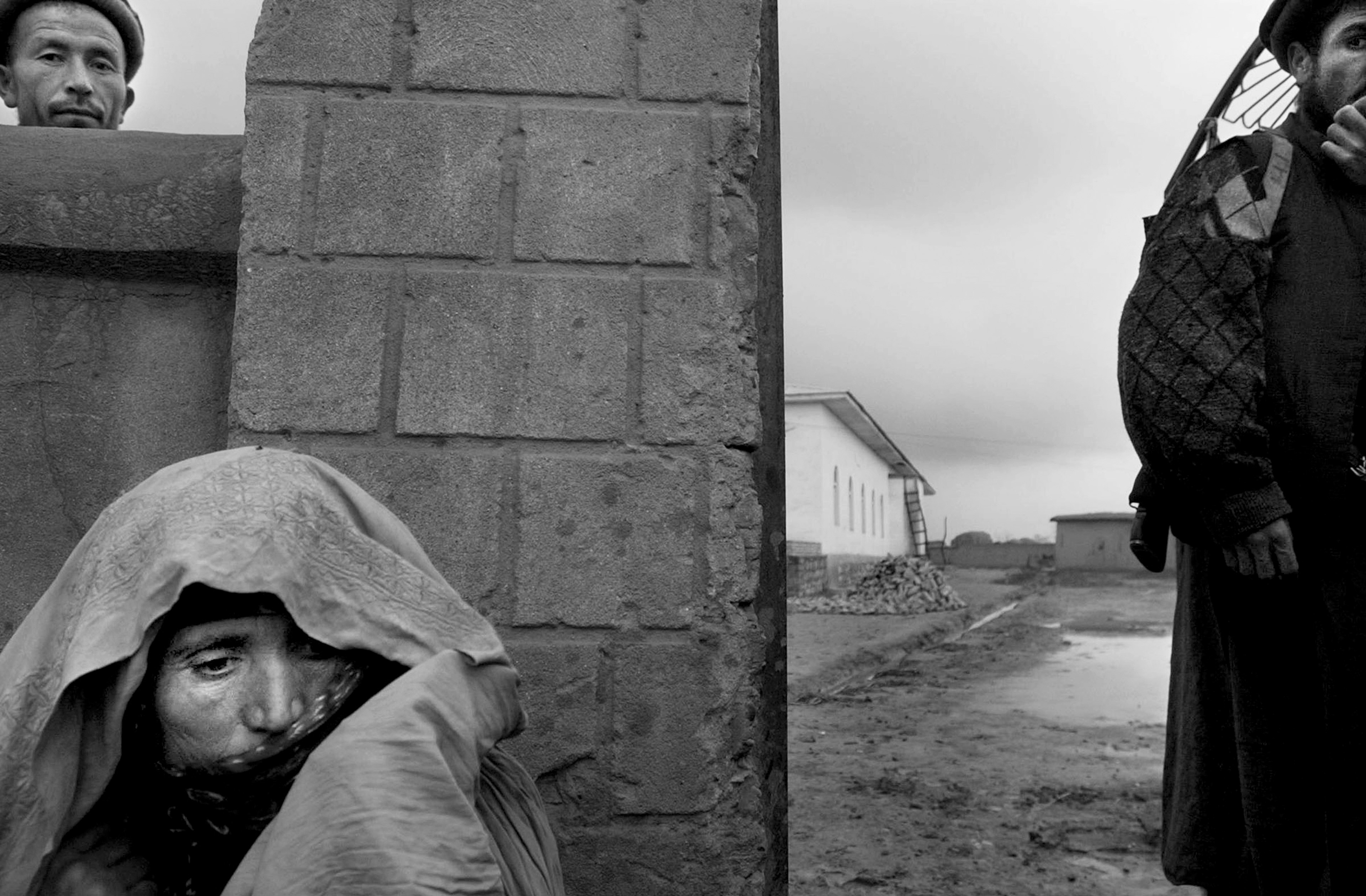
Now I see the hopelessness in Juma's eyes, feel the shame in her position, I feel frustration for her and her lack of choice in life.
 |
| ”The most important thing about photography to me is the idea that the pictures you make may make a difference.” Cheryl Diaz Meyer |
The value of the video "Using Virtual Reality to Help Kids with Autism | Freethink Superhuman
The video "Using Virtual Reality to Help Kids with Autism | Freethink Superhuman" by Freethink is a piece of video multimedia that can be learned from. The video is filled with action shots of children using a virtual reality headset next to a video of what they were seeing. The whole video focuses on the issue of how to help those who are living with autism. This is done by giving them access to a virtual reality headset to see if it can help.The video is primarily structured by narrating an interview over b-roll of children who have autism interacting with the virtual reality headsets. Occasionally they will cut away from the b-roll back to the interview itself. Doing this lets you see who is talking. There were a few interaction shots with a child using virtual reality while an adult talks to them about what they are seeing and what they should do. The source for the information seems to be the interviewed subject.
There is definitely some editorializing as this video is in overtly in favor of the actions being taken. Both the music that they added and the interview lines they chose portray the product in a favorable light. The shots have an amount of wall space and the walls are usually out of focus while the people in frame are in focus. The shots where someone is using a virtual reality headset have a very out of focus background, which helps you focus more of the subject.
Ambient sound is completely absent, and is instead is replaced by music. Most natural sound seems to be cut in favor of both the interview and the background music.
The video has good sequencing, allowing it to be more effective at telling its story. The video uses many jump cuts, and some of them are very jarring. There is visual variety in the different shots with both close-up shots and medium shots, as well as a few establishing shots. The shots were all shot inside, so the available light was primarily interior lighting. The lighting was soft and not as harsh as lights can be.
The aspect ratio is 16:9, which is fairly common. There are a few detail shots, which show the creation and use of the virtual reality software outside of virtual reality. Shots tend to be fairly static and do not feature pans, tilts, and zooms. The video features both rule of thirds and symmetry, which makes it more visually pleasing.
Some of the interview sections had head room but not all of them. For the interview sections, all of the shots had the subject facing the camera, but the distance varied each time. During the interview sequences, the name of the subject and how they relate to the story are given. The interview shots do have look space as well.
A Local Storyteller
A professional storyteller is exactly what my friend Kami Couch is. She is a filmmaker, writer, photojournalist, photographer, and all-around story teller who uses her gift to "help people see their greatness," as one of her clients put it in summer of 2017.
 |
| Kami Couch at the Bonneville Salt Flats, posted on November 20, 2018. Credit Evelyn Soha @evelynrosesoha on Instagram. Photo link https://www.instagram.com/p/BqaFrlYAKui/?utm_source=ig_web_copy_link |
Much of Couch's work, including articles, videos, and photos, can be found at her blog https://www.kamicouch.com. Working from her home base, a tiny home in Washington State, Couch travels wherever her heart and the stories she tells lead her. From Alaska to Arizona, from Nashville to the UK, up and down the west coast and everywhere in between, the most notable skill Couch displays is her ability to tell robust stories with what seems like very little to write about.
In "The Storyteller, Episode 1" Couch introduces her viewers to her mission, beginning with Nashville, Tennessee.
Couch's composition and photo opportunities speak to a level of trust and relationship that she develops with her subjects and friends, an important skill any multimedia professional must cultivate. In Nashville, Couch said she worked on a farm where a welder named Jack would come to do projects for the farmers. Jack always brought a good time with him, Couch said, and he wore a good nature and tattoos very well. After several interactions with him and longing to take photos of him driving in his truck, Couch said she finally got her opportunity when her gear was with her and the sun struck his face at golden hour. Couch said that Jack asked her if she was going to use his photo in the corn fields to scare crows, and as he laughed, she captured the photo below:
 |
| Jack smiles in his truck on a Nashville farm. Photo by Kamirin Couch (https://www.instagram.com/p/BkeN1C5ALY6/?utm_source=ig_web_copy_link) "...You have to build trust fast, especially since photography makes people feel vulnerable," Couch said. |
"People want to be immersed, to know they are not alone," said Couch. "People want to get involved in a story, to carve out a role for themselves, to make it their own ... Stories are recognizable patterns and in those patterns we find meaning."
 |
| Couch's work for a lifestyle shoot in Portland, Oregon. https://www.instagram.com/p/Blen_hVgyq7/?utm_source=ig_web_copy_link |
Couch said that the science is there to back up the general human affinity for storytelling. " Our brains are far more engaged by storytelling than by cold hard facts," She said. "When reading straight data, only the language part of our brains work to decode meaning. But when we read a story, not only do the language parts of our brains light up, but also any other part of the brain we would use if we were actually experiencing what we were reading."
Kami uses her childhood memories and experiences as fodder for her stories and work today. Because her father is a commercial fisherman, a lot of Couch's work is based in Alaska. Couch grew up accompanying her father on fishing trips and helping on his boat. In a blog post last summer she wrote about her father, who was born and raised in Alaska: https://kamicouch.wixsite.com/blog/blog/to-the-greatest-legend-in-my-life
 |
| Couch's father waves on his fishing boat. Photo by Kami Couch https://www.instagram.com/p/BkIWuO9A9Ui/?utm_source=ig_web_copy_link |
One of Couch's five mottos, "Finding the extraordinary in the ordinary," is clearly woven throughout her portfolio. I think we can all learn from Couch in that many wonderful subjects for photos as well as people for relationships and life stories aren't in a wonderful high-end studio somewhere, but right in front of us.
Maddie
Subscribe to:
Posts (Atom)
-
Spider-Man: Into the Spider-Verse is a movie that taken a vast amount of risks as it took the animators a year until they were fin...
-
"Alternative Math" is an award wining short comedy film about a teacher who faces a belligerently anti-fact society. Ideaman St...
-
NPR, or National Public Radio, is an online platform that regularly publishes nonfiction audio and written stories about a variety of top...


